Conteúdos
Teóricos / Conteúdos Programáticos |
Os
Conteúdos
Teóricos no módulo “Ambiente” devem ser introduzidos e
discutidos no contexto mais amplo da Responsabilidade Social das Empresas
(RSE), utilizando, como abordagem metodológica, o “Mapa da RSE”.
A
protecção
ambiental é mais do que uma moda. Falar em ambiente significa
mais do que produzir de modo “ecológico” ou obter um rótulo verde.
Significa uma maneira especial de pensar e de agir ao longo de todo o
ciclo de vida dos produtos da empresa (deste a fase de compra de
matérias-primas até às fases em que os produtos e serviços são
vendidos, consumidos e devolvidos à natureza).
As
questões principais que se colocam são: Em que é que pensamos quando
pensamos em “Ambiente”? Quais são os impactes ambientais mais
relevantes da actividade da nossa empresa? Em que é que temos de pensar
para gerir os impactes ambientais da nossa empresa?
| Minimização
da produção de resíduos com impacte ambiental |
Um
dos tópicos mais importantes quando se fala de ambiente num contexto
empresarial prende-se com a minimização
da produção de resíduos com impacte ambiental.
Uma
das melhores formas, colocadas à disposição das empresas para produzir
menos resíduos é praticar os 3 Rs:
 Reduzir
a quantidade e
toxicidade do lixo que produzem; Reduzir
a quantidade e
toxicidade do lixo que produzem;
Reutilizar
contentores e produtos; reparar o que está avariado ou dá-lo a alguém
que o consiga reparar;
Reciclar
o
mais possível, o que inclui a compra de produtos total, ou parcialmente,
reciclados.
| Reduzir |
|
|
Prevenção
da produção de desperdícios, ou "redução na fonte",
significa consumir e deitar fora em menor quantidade.
Modos de Reduzir:
Comprar
bens duradouros;
Procurar
produtos e embalagens o mais possível isentos de produtos tóxicos;
Reconceber
os produtos de forma a exigirem menos matérias-primas na produção,
terem uma maior duração ou consumirem menos energia.
A
redução na fonte impede, desde logo, a geração de resíduos
sendo, por isso, o método preferido de gestão de resíduos e uma
das melhores formas de protecção do ambiente.
|
 |
| Reciclar |
|
|
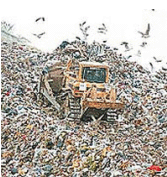
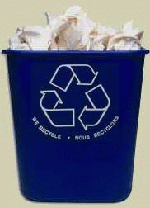
A
reciclagem transforma materiais que, de outro modo, se tornariam
desperdício, em recursos valiosos. Para além disso, gera um
conjunto de benefícios ambientais, financeiros e sociais. Os
materiais como o vidro, o metal, o plástico e o papel podem ser
recolhidos, separados e enviados para locais próprios que os
processam, transformando-os em novos materiais e produtos.
Benefícios
da Reciclagem:
Conserva recursos para
as gerações futuras;
Evita
emissões de muitos gases responsáveis pelo efeito de estufa e
substâncias poluentes da água;
Poupa
energia;
Fornece
matérias-primas valiosas para a indústria;
Cria
empregos;
Estimula
o desenvolvimento de tecnologias mais ecológicas;
Reduz
a necessidade de novos aterros e incineradoras.
Comprar Produtos Reciclados
Reciclar é mais do que depositar os produtos recicláveis no
ecoponto. Para tornar a reciclagem economicamente viável há que
comprar produtos e embalagens reciclados. Ao comprar produtos
reciclados, está-se a dar um incentivo económico para que os
materiais recicláveis sejam recolhidos, transformados e vendidos
como novos produtos. Assim, a compra de produtos reciclados gera
benefícios tanto económicos como ambientais. A compra de
produtos feitos de, ou embalados em, materiais reciclados poupa
recursos para as gerações futuras.
|

|
Outro
tópico fundamental quando se fala de Ambiente num contexto empresarial é
a Prevenção
da Poluição. A poluição assume diferentes formas,
igualmente relevantes: a poluição
atmosférica (alterações climáticas, destruição da camada
de ozono, acidificação, smog,
saúde); a poluição
hídrica (eutrofização, alteração dos habitats); contaminação
dos solos (acumulação de poluentes no ecossistema) e redução
da biodiversidade.
| Poluição
Atmosférica |
|
|
Como
é sabido, a atmosfera fornece-nos oxigénio, condição essencial
para a nossa sobrevivência. A actividade humana liberta para a
atmosfera substâncias que provocam problemas nos seres humanos, nas
plantas e nos animais.
Há
vários tipos de poluição atmosférica e efeitos bem conhecidos da
poluição que são comummente discutidos. Entre eles contam-se o smog,
a
chuva ácida, o efeito
de estufa, e os "buracos"
na camada de ozono. Cada um destes problemas tem
implicações sérias para a nossa saúde e bem-estar assim como
para o ambiente em geral.
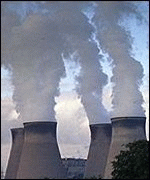
Um
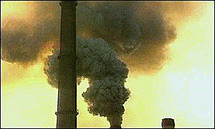
tipo de poluição atmosférica é a libertação de partículas
decorrente da combustão de combustível para obtenção de
energia. O fumo do gasóleo é um bom exemplo deste tipo de
partículas. Este tipo de poluição é, por vezes, designado como
poluição
de "carbono negro". Os fumos
decorrentes da combustão em automóveis, casas e indústrias é uma
das maiores fontes de poluição atmosférica. Algumas autoridades
acreditam que mesmo a queima de madeira e carvão em lareiras e
churrascos pode libertar quantidades significativas de fuligem para
o ar.
Outro
tipo de poluição é a libertação de gases
nocivos, como o dióxido de enxofre, o monóxido de
carbono, os óxidos de azoto e vapores químicos. Estes podem
provocar outras reacções químicas uma vez na atmosfera,
provocando smog
e chuva
ácida.
Também
se deve ter em consideração a poluição produzida dentro das
nossas casas, escritórios e escolas. Alguns dos poluentes referidos
podem ser criados por actividades tão simples como cozinhar e
fumar. Assim, quando se trata de poluição atmosférica, é
importante considerar tanto a poluição atmosférica exterior como
interior.
|
 |
| Poluição
Hídrica |
|
|
Água
potável é essencial à vida. Infelizmente, deste a Revolução
Industrial, a maior parte dos rios da Europa têm sido usados como
um modo conveniente de transporte de resíduos para o mar,
alterando
os habitats naturais e destruindo
a biodiversidade de milhares de quilómetros de cursos de
água, prejudicando a saúde humana e poluindo as águas costeiras.
Nas
últimas décadas têm-se assistido a progressos significativos no
tratamento dos esgotos e lixos industriais enviados para os rios da
Europa, de que resultaram níveis mais baixos da maior parte dos
poluentes e uma melhoria mensurável da qualidade
da água. O sector agrícola, por outro lado, não fez
tantos progressos. Os níveis de nitratos nos rios da Europa ainda
permanecem tão elevados como no início da década anterior. Não
é apenas a qualidade da água que é importante mas também a
quantidade disponível para uso humano e, de modo cada vez mais
frequente, há problemas de escassez
de água nos arredores das grandes cidades e na Europa do
Sul.
A Eutrofização
é o enriquecimento excessivo das águas com nutrientes e os
efeitos biológicos adversos associados e permanece como um dos
maiores problemas ambientais da Europa. As águas da Europa são
afectadas à escala global, desde as massas de água interiores,
como águas subterrâneas, rios e lagos até às águas costeiras
e de transição e aos ecossistemas em mar aberto. A
Eutrofização é causada por grandes entradas antropogénicas de
nutrientes com compostos de azoto (N) e fósforo (P) no ambiente
aquático provenientes de uma grande número de sectores da
sociedade.
|
 |
| Contaminação
dos Solos |
|
|
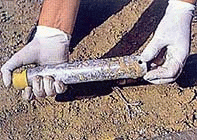
Sendo
os solos tão essenciais para a sociedade humana como a atmosfera e
a água, a degradação dos solos não tem recebido, nem de perto
nem de longe, tanta atenção como as ameaças a esses dois
elementos. Os solos cultiváveis estão na base de 90% da
alimentação humana, da alimentação de gado, da produção de
fibras e de combustível. Apoiam a fixação humana e fornecem
matérias-primas e águas subterrâneas. Os maiores problemas da
Europa incluem: perda
de solos superficiais devido à erosão
ou actividades de construção, contaminação
e acidificação.
A
falta de atenção dada à degradação dos solos pode ser
verificada não só pela ausência de directivas europeias ou
objectivos de protecção dos solos como também pela escassez de
informação disponível. Enquanto na UE, por exemplo, 300.000
áreas foram identificados como definitivamente, ou potencialmente,
contaminados, a estimativa é que existam 1,5 milhões de áreas
contaminadas.
|
 |
| Redução
da Diversidade Biológica |
|
|
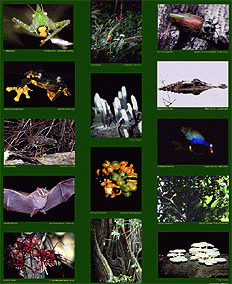
O
meio ambiente natural da Europa é bastante diverso – inclui uma
vasta gama de géneros, espécies, ecossistemas e habitats. Esta
biodiversidade é a sua “apólice de seguros”, pois assegura a
capacidade do ambiente para se adaptar às mudanças causadas por
factores tão diversos como a actividade vulcânica ou o impacte da
actividade humana na paisagem.
A
Biodiversidade
em declínio também é um sinal de alarme pois indica
que o
impacte global da sociedade sobre o ambiente é demasiado pesado.
Embora alguns níveis de poluição estejam em queda e a
protecção da natureza se esteja a integrar melhor no planeamento
urbano, na política
agrícola
e noutras políticas, a biodiversidade na UE ainda está sob a
ameaça de um grande número de factores.
|
 |
| Poupança
no Consumo de Recursos Naturais |
Os
recursos naturais do Planeta
são
vitais para a sobrevivência da população humana. No entanto, esses
recursos são limitados pela capacidade do Planeta de os
renovar.
A água potável, as florestas e os produtos de colheita são renováveis,
desde que a exploração não exceda a regeneração. Os combustíveis
fósseis e minérios metálicos são não renováveis. Embora muitos
efeitos da sobre-exploração sejam sentidos localmente, a crescente
interdependência das nações e o comércio internacional de recursos
naturais fazem sentir as suas pressões e a gestão sustentável torna-se
uma questão global.
A
redução do consumo de recursos naturais através da redução das
taxas de esgotamento dos recursos renováveis do Planeta e da procura de
fontes de recursos alternativas para os recursos não renováveis é
algo que nos diz respeito a todos, enquanto indivíduos e enquanto
empresas. Enquanto empresas, identificar o tipo de recursos renováveis
e não renováveis de que os processos das nossas empresas necessitam e
identificar formas e estratégias de poupança no consumo desses
recursos pode ser vital, numa abordagem de longo prazo do negócio.
| Instrumentos
e Abordagens de Apoio
à Gestão
dos Impactes
Ambientais |
Existem
no mercado numerosos instrumentos
e abordagens de apoio à gestão dos impactes ambientais.
Mencionam-se
aqui, apenas, a “abordagem do ciclo de vida do produto”, o EMAS - Eco-Management
and Audit Schema (Sistema Comunitário de Ecogestão e Auditoria), a
norma ISO 14000 e o Rótulo Ecológico Europeu, como diferentes
abordagens possíveis para trabalhar de um modo integrado, e de acordo
com normas estabelecidas, as questões ambientais no quadro de uma
estratégia empresarial.
| Abordagem
do Ciclo de Vida do Produto |
|
|
O objectivo de uma política ambiental orientada para o ciclo de
vida do produto ou Política Integrada do Produto (PIP) é lidar com
as questões ambientais de um modo integrado e ao longo de todas as
fases do ciclo de vida do produto tendo por objectivo minimizar
os efeitos ambientais globais dos produtos. Uma abordagem
integrada dos problemas ambientais ao longo do ciclo de vida de um
produto significa pensar
em todas as fases do ciclo de vida desse produto, i.e.
concepção, matérias-primas utilizadas, produção, transporte/distribuição,
e fases de uso e de desperdício. Por exemplo, as empresas deveriam “pensar
antecipadamente” nas fases de uso e desperdício quando concebem
um produto, para minimizar a poluição em termos gerais.
No entanto, é óbvio que as preocupações ambientais não podem
ser consideradas isoladamente e têm de ser integradas com outros
aspectos do produto tais como o desempenho, a qualidade e a
segurança.
|
|
| EMAS
- Eco-Management and Audit Schema |
|
|
O
EMAS - Eco-Management and Audit Schema (Sistema
Comunitário de Ecogestão e Auditoria) é uma norma
de gestão ambiental da UE introduzida em Abril de
1995. É um instrumento voluntário da UE que reconhece
organizações que apostam na melhoria contínua do seu desempenho
em termos ambientais. As organizações registadas no EMAS cumprem
a legislação em vigor em matéria ambiental, possuem um sistema
de gestão ambiental e produzem relatórios sobre o seu desempenho
ambiental através de uma declaração ambiental verificada por
entidades independentes. São reconhecidas pelo logo EMAS, que
garante a fiabilidade da informação fornecida.
|
 |
|
Mais
informação disponível em:
http://europa.eu.int/comm/environment/emas/index_en.htm
|
|
| ISO
14001 |
|
|
A
ISO 14001 é uma norma
de gestão ambiental desenvolvida pela Organização
Internacional de Normalização. A família ISO 14000 trata
principalmente da "gestão ambiental" e inclui tudo o que
a organização faz para minimizar os efeitos nocivos das suas
actividades no ambiente e para conseguir melhorias contínuas do seu
desempenho ambiental.
|

|
|
Mais
informação disponível em:
http://www.iso.org/iso/en/ISOOnline.frontpage
|
|
|
|
|
| Rótulo
Ecológico Europeu |
|
|
O
Rótulo Ecológico Europeu foi criada em 1992 e é uma
certificação para distinguir produtos e serviços ecológicos e
“amigos do ambiente”.
Ao
longo dos últimos anos, a "Flor" tornou-se um símbolo de
reconhecimento europeu, fornecendo orientação simples e exacta aos
consumidores.
Todos
os produtos com o símbolo da "Flor" são testados por
organismos independentes relativamente ao cumprimento de rigorosos
critérios ecológicos e de desempenho. Existem actualmente vinte
e três grupos diferentes de produtos e já foram concedidos mais
de 250 rótulos para várias centenas de produtos.
O Rótulo Ecológico Europeu é administrado pelo Comité do
Rótulo Ecológico da União Europeia (CREUE) e recebe apoio da
Comissão Europeia, de todos os Estados-Membros da União Europeia
e do Espaço Económico Europeu (EEE). O Comité do Rótulo
Ecológico inclui representantes da indústria, de grupos de
protecção do ambiente e de organizações de consumidores.
|

|
| Mais
informação disponível em:
http://www.eco-label.com/default.htm
|
|
|
|
|
|